Blog
From Quarry to Project: The Management Process of Large-Scale Natural Stone

Natural stone continues to be an indispensable material in architecture in terms of both aesthetics and durability. Especially large-format solutions such as travertine marble slabs are frequently preferred in modern projects to create seamless surfaces and design prestigious spaces. However, behind these applications lies not only a visual preference but also a highly detailed planning, production, and installation process.
In this article, we will examine in detail the entire journey of natural stone—from extraction at the quarry to its final application within a project.
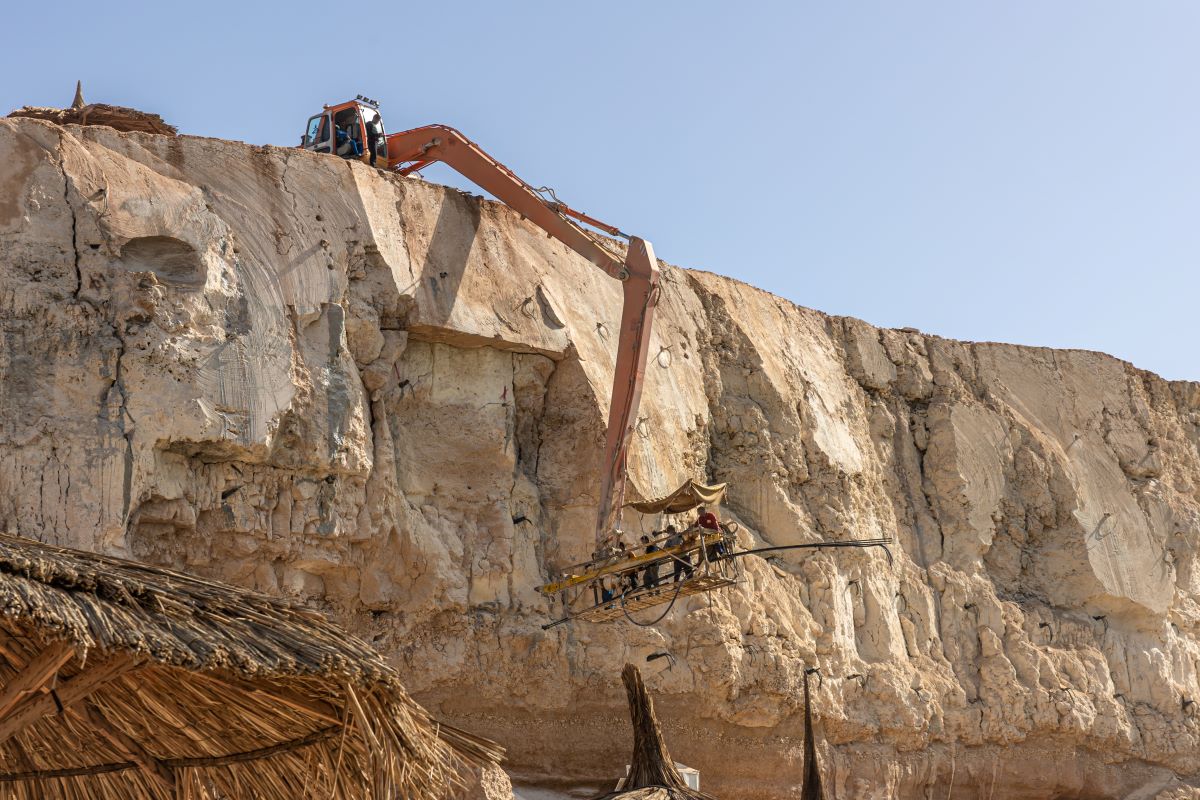
The Source of Natural Stone: Quarry Selection and Production Process
The quality of natural stone is directly related to the quarry from which it is extracted. Each quarry offers different color tones, vein structures, and density values. Therefore, selecting the right quarry for a project is a critical step in achieving the desired final appearance.
During the block selection process, the stone must have a homogeneous structure, be free of cracks, and meet the required aesthetic standards. When it comes to large-format natural stones, these criteria become even more important. Even the smallest defect can affect the overall visual integrity when used as a single continuous surface.
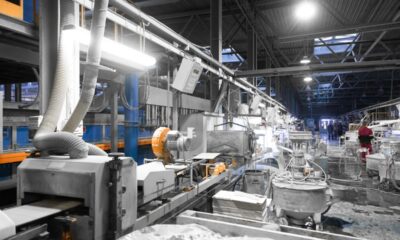
In the production phase, blocks must be cut without damaging the natural structure of the stone. At this stage, the precision of the machinery and the experience of the operators play a major role.
Pre-Project Planning for Large-Scale Stones
Planning before the start of the project is one of the most critical stages of the entire process. The dimensions, thickness, and layout of the stones to be used in large surface applications must be determined in detail in advance.
At this stage, strong coordination between the architect, contractor, and supplier is essential. Poor planning can lead to increased costs and time loss.
Calculating the waste ratio is also crucial. Potential material loss during cutting should be minimized, which is only possible through proper cutting plans.
Technological Approaches in Cutting and Processing
Today, natural stone processing technologies have advanced significantly. CNC machines and automated cutting systems enable millimetric precision.
Surface finishing techniques also define the character of a project. Polished, honed, or brushed finishes create different aesthetic effects. Therefore, the surface selection should align with the overall design concept.
Additionally, quality control processes must be implemented at every stage of production. Dimensional accuracy, surface quality, and edge workmanship should be carefully inspected.
Logistics Management: Transportation and Storage Process
Transporting large-format natural stones is a highly sensitive process. Due to their weight and fragility, special packaging techniques are required.
In international transportation, container loading plans are critically important. Special fixing systems are used to prevent damage during transit.
During storage, stones must be positioned on flat surfaces at the correct angle. Otherwise, there is a risk of deformation or cracking.
Pre-Installation Preparation and Surface Analysis
Before applying natural stone, a thorough surface analysis must be conducted. The structural system must be capable of supporting the weight of the material.
Surface flatness directly affects installation quality. Therefore, necessary corrections should be made before installation begins.
Pre-installation sample tests also help identify potential issues in advance.
Installation Process: Applying Large-Format Stones
The installation phase is one of the most sensitive parts of the entire process. Installing large-format stones requires specialized equipment and experienced teams.
Vacuum lifting systems and specialized installation tools are commonly used. Proper placement of the stone directly affects the continuity of the surface.
Joint planning is also a critical detail. The goal is to achieve the most seamless appearance possible.
Risks Encountered During the Project and Solution Methods
Various risks exist in large-scale natural stone applications, with breakage and damage being the most common.
To minimize these risks, proper packaging, careful transportation, and professional installation are essential.
Logistics delays can also impact project timelines, so contingency plans should always be prepared.
Cost Management in Large-Scale Natural Stone Use
In such projects, cost is not limited to the material alone. Labor, logistics, and installation processes also contribute to the total expense.
However, in the long term, natural stone offers an economical solution due to its durability. Low maintenance costs are also a significant advantage.
Sustainability and Natural Stone Usage
Natural stone stands out as an environmentally friendly material. As a resource obtained from nature, it offers long-term usability when applied correctly.
Attention should be given to waste management and energy efficiency during production processes.
The Rise of Large Surface Applications in Modern Architecture
Today, simplicity and continuity are at the forefront of architectural design. For this reason, large surface coverings are increasingly preferred.
Seamless surfaces create a sense of openness and spaciousness within a space, making them particularly advantageous in luxury projects.
The journey of natural stone from quarry to project requires detailed planning and expertise. Making the right decisions at every stage of this process directly impacts the success of the project.
At this point, working with the right supplier makes a significant difference. Cem Marble, known for its reliability and quality-oriented approach, provides professional solutions in large-scale natural stone projects and supports every stage of the process. From selecting the right material to final application, achieving better results becomes much easier with the right guidance.