Blog
How Can Natural Stone Offcuts Be Used Responsibly?

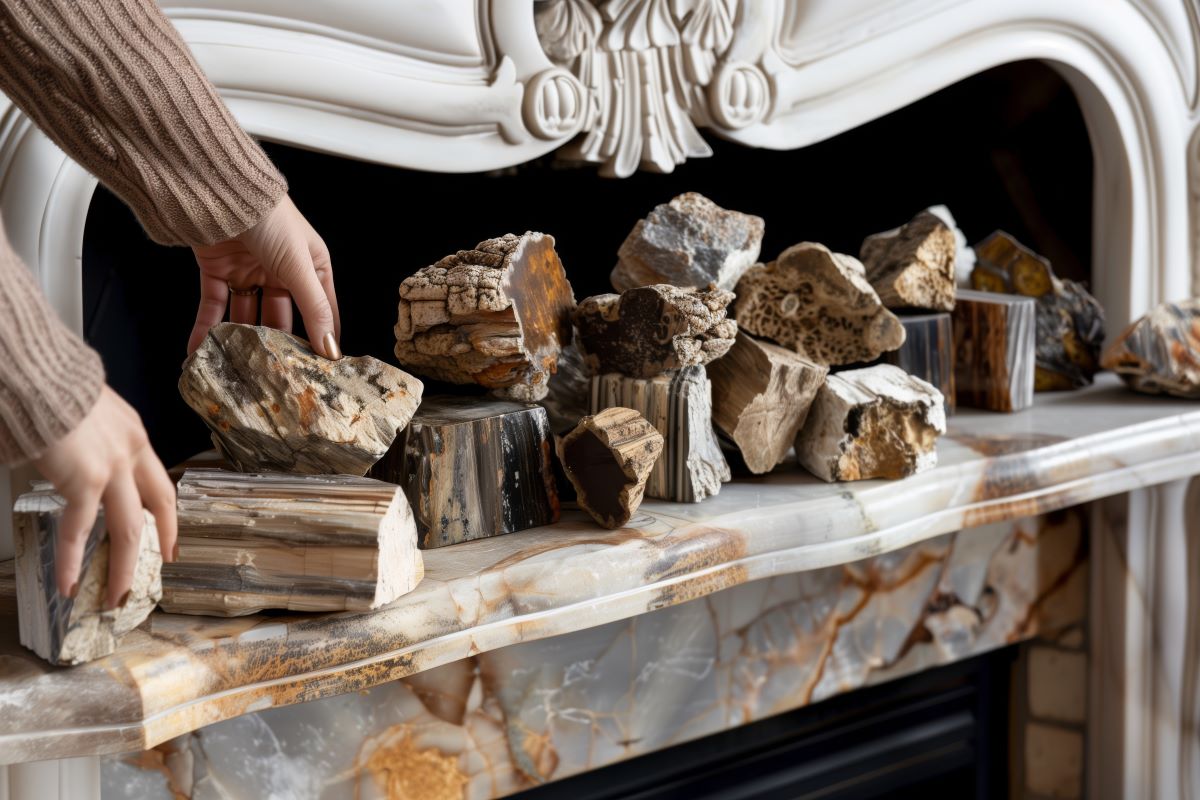
Natural stone offcuts are the pieces left after slabs or blocks are cut for a particular project. Some are large enough for a second purpose; others are narrow strips or irregular fragments. Their value depends on more than size. Stone type, thickness, condition and the work needed to prepare them all affect whether reuse makes sense. A responsible approach begins by reducing avoidable offcuts during planning, then finding suitable uses for the material that remains.
When ordering marble cut to size, coordinating dimensions and cutting layouts early can help reduce unnecessary waste while leaving more usable remnants. Where offcuts are unavoidable, recording their measurements, finish and condition makes it easier to match them with smaller applications, such as shelves, vanity details or furniture tops. This turns reuse into a planned part of material management rather than a decision made only after cutting is complete.
Why Do Offcuts Occur?
A stone slab rarely matches a project’s dimensions exactly. Cutting a countertop opening, shaping a stair tread or aligning a distinctive vein can leave usable material around the finished piece. During installation, further trimming may be needed to fit corners and transitions.
Some offcuts are therefore unavoidable. Even so, accurate measurements and a thoughtful cutting layout can reduce their number. When several elements will be made from the same stone, planning their positions together may reveal space for smaller pieces. This also makes it easier to identify potential uses before the remaining material is moved into storage. Industry guidance encourages fabricators to use excess stone where possible, including in smaller products such as mosaics and veneer.
How Should Offcuts Be Sorted Before Reuse?
An offcut should be assessed as a piece of material, not simply as a leftover shape. A useful first step is to record its dimensions, thickness, stone type and finish. Its edges, corners and surface should then be checked for cracks, chips or other damage that could affect its next use.
Sorting pieces by size and condition makes the options clearer. A broad, sound remnant may suit a small tabletop or shelf. A narrow strip might become a threshold or border. Smaller fragments may be appropriate for mosaic work if they can be cut and finished safely. Pieces with visible damage need closer inspection; cutting away a flawed area may be possible, but an attractive surface alone does not establish that a piece is suitable for use.
The intended location matters too. Stone that works well as an interior accent may face different demands outdoors or underfoot. Its properties should be checked against the proposed application before a design is finalized.
Which Small Design Elements Can Make Good Use of Offcuts?
Smaller architectural details often provide a practical home for offcuts. Depending on the dimensions and suitability of the stone, remnants can be considered for windowsills, thresholds, wall niches, vanity shelves, hearth surrounds and decorative inlays. These elements need relatively little material but still require accurate cutting and appropriate edge finishing.
Designing around the available piece is usually more effective than forcing it to imitate a larger slab. A compact shelf can be sized to suit a remnant, while a narrow strip can define a deliberate border. The stone’s natural pattern can also guide the decision. Keeping a distinctive vein intact may produce a stronger result than dividing it into several unrelated pieces.
Offcuts from one project can sometimes be used elsewhere in the same space, creating a quiet visual connection between rooms. Natural Stone Institute guidance also identifies using remnants in another project as a way to keep useful material in circulation.
Can Offcuts Be Used in Furniture and Decorative Objects?
Furniture and small objects offer more flexibility in shape than many architectural applications. A suitable offcut might become a side table top, a tray base or a display plinth. Small pieces can be developed into bookends or other objects where the stone’s colour and texture can be appreciated at close range.
The design still needs to account for weight, support and handling. A tabletop must be properly supported, and an object intended to be picked up should have comfortable, finished edges. Joining several fragments can create an interesting composition, but the connection must be appropriate for the object’s use. The aim is a useful, durable piece, rather than an object made solely to consume leftover material.
What Should Be Considered for Outdoor Reuse?
Gardens and exterior spaces can accommodate irregular stone shapes, but outdoor reuse requires careful selection. Offcuts may be incorporated into planted-area edging, decorative gravel-free features or paving details where their size and properties are suitable. A collection of pieces can sometimes form a patterned surface without hiding the variation that makes natural stone distinctive.
Before using stone outdoors, consider exposure to moisture, temperature changes and foot traffic. A smooth remnant intended for a wall may be unsuitable for a walking surface. Uneven thicknesses can also make installation difficult. Edges and bedding need attention so that pieces remain stable and do not create a trip hazard. Suitability depends on the specific stone and the conditions of the site, so the proposed use should be reviewed on its own merits.
When Is Recycling More Sensible Than Direct Reuse?
Direct reuse is often worth exploring first because it preserves more of a piece’s existing shape and finish. It is not always practical, however. Very small fragments, damaged pieces or mixed material may have no sound application as finished stonework. In such cases, processing suitable stone for aggregate or another secondary use may be an option, subject to the material and the facilities available locally.
The additional work should be part of the decision. Cutting, finishing, storing and transporting a remnant all require resources. For projects using Cem Marble materials, assessing these factors alongside the stone’s dimensions and condition can help identify practical reuse opportunities. A proposed reuse that involves extensive processing for a short-lived object may offer little practical benefit. Matching a sound piece to a nearby, lasting need is a more considered approach.
How Can Responsible Planning Turn Remnants Into Useful Material?
Responsible offcut use starts before fabrication and continues after installation. Careful measurements help limit unnecessary cuts. Clear records of remaining pieces make them easier to find. Designers and fabricators can then judge each remnant by its condition and match it to an appropriate application, rather than assuming every piece has the same potential.
This approach also benefits from a strong understanding of natural stone. Cem Marble’s experience with the material and its attention to product quality provide a useful basis for assessing how a piece may be used and finished. The final decision still rests on the dimensions, properties and condition of each offcut.
Natural stone offcuts are best used responsibly when the purpose is clear and the result is made to last. Reducing waste at the cutting stage, reusing sound pieces where they fit, and directing unsuitable remnants toward appropriate processing together form a practical way to make fuller use of the material.