Blog
Why Do Rust-Coloured Stains Appear on Natural Stone After Installation?

A few weeks after a natural stone floor is laid, an orange patch appears beside a joint. On an exterior wall, a brown streak develops below a fixing after heavy rain. Both marks look like rust, but they may have different origins. Iron-bearing minerals within the stone can oxidise, nearby metal can corrode, or water can carry iron onto the surface from elsewhere. Some brown marks have an entirely different cause.
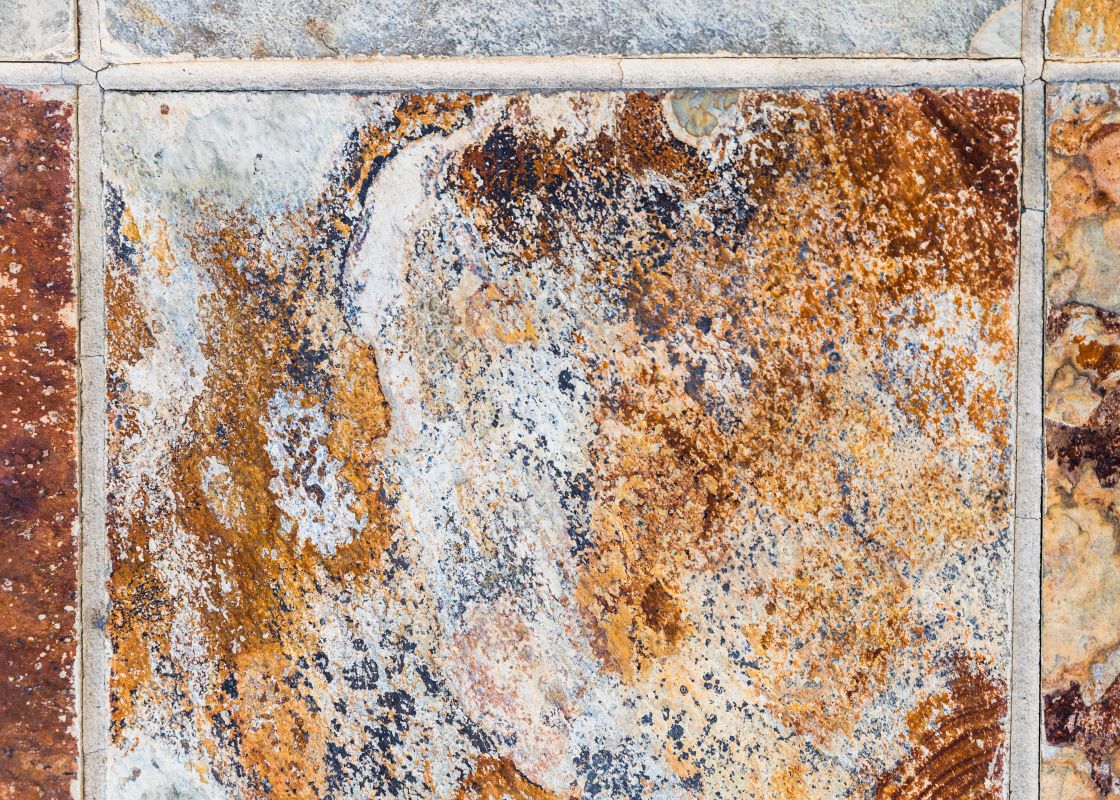
When rust-coloured stains appear on natural stone after installation, including on a tumbled travertine tile, the most useful clues are where the marks begin, when they become visible and whether they return after the area gets wet. Reading those clues together helps determine whether the next step is to inspect a fixing, trace a moisture source or examine the stone itself.
How Can Iron Within Natural Stone Cause Discolouration?
Some natural stones contain iron-bearing minerals. When susceptible minerals are exposed to moisture and oxygen, they can oxidise and produce yellow, orange or reddish-brown discolouration. The change may appear as small spots around mineral grains, a diffuse patch or a mark that follows a mineral-rich feature in the stone. A piece that looked uniform when dry may show new colour after repeated wetting.
The position of the mark is worth comparing with photographs taken before installation or with an unused piece from the same batch. Warm tones that were already visible may be part of the stone’s original appearance. A spot that develops or spreads after installation calls for a closer look at what changed around that particular piece. If only one tile is affected, its mineral composition is one possibility. Local conditions beneath or beside that tile can also explain why it behaves differently from its neighbours.
How Can Metal Fixings and Construction Debris Leave Rust Stains?
Iron and steel near a stone surface can leave a recognisable pattern as they corrode. A circular mark may correspond to the base of a metal planter. An orange trail below a bracket may follow the path of rainwater. Fine specks near a railing can point to metal particles left behind during cutting or grinding. These particles can be easy to miss during installation and become visible only after exposure to moisture.
The source may sit above or behind the stained area. On a façade, for example, water can collect corrosion products from a fixing or gutter and deposit them further down the wall. The darkest part of the streak may simply be where runoff collects. Following the mark uphill and checking the components along that route can reveal a source that would be missed by inspecting the stained piece alone.
Why Does Moisture Make Stains Appear Weeks After Installation?
Moisture can support oxidation and carry iron compounds through or across an installation. Rainwater, irrigation, leaks and residual construction moisture are all worth considering, depending on the location. A stain may become more apparent after water evaporates and leaves a coloured deposit. Repeated wetting can then deepen the mark or extend it along the same path.
The timing helps narrow the search. A streak that returns after rain directs attention to runoff, joints and nearby metalwork. A patch that grows along the edge of an indoor floor warrants a check for recurring moisture at that perimeter. A mark that first appeared after the final site clean makes the cleaning products and methods part of the investigation. Recording what happened before the colour appeared can be more informative than judging its shade from a single photograph.
How Can You Tell a Rust Stain From Other Brown Marks?
Colour alone gives an incomplete diagnosis. Plant material, soil and some construction residues can leave brown marks that resemble iron staining. In an outdoor setting, it helps to check what has been sitting on the surface and what water passes over before it reaches the stone. Fertiliser containing iron, for instance, can create orange marks on paving even when there is no corroding fixture nearby.
Start by looking at the pattern when the surface is dry. A ring or straight edge may trace the outline of an object. Repeated dots beneath similar fixings suggest a shared installation detail. Scattered patches that follow features within individual pieces may justify examining the stone itself. Photographs taken from the same angle before and after a wetting event can show whether the mark is stable or still changing. If those observations point to several possible causes, a stone specialist can assess the surface and the surrounding installation together.
What Should Be Checked Before Treating a Rust-Coloured Stain?
Address an identifiable source before treating the stone. If rusty runoff is reaching a wall, correcting the runoff path or dealing with the corroding component reduces the chance of the streak returning. If moisture repeatedly reaches the back of a floor tile, investigate that route before deciding how to treat the visible patch. The condition of the surface after subsequent wetting can help show whether the source has been resolved.
Treatment also depends on the stone type, finish and depth of the stain. Cem Marble’s natural stone expertise can help identify the material and its finish before a treatment is selected. Acidic products can etch calcium carbonate stones such as marble and limestone, leaving a dull patch. A specialist may use a compatible poultice to draw out some metallic stains, although deeply embedded discolouration can persist. Testing the proposed treatment on an inconspicuous area helps reveal changes in colour or sheen before a larger section is treated.
What Can a Post-Installation Stain Tell You About the Stone and Its Setting?
A quality-focused approach starts with understanding the stone’s natural variation and the conditions it will face in use. Reviewing samples for visible mineral features and finish consistency helps project teams assess whether the material is suitable for the intended setting. Keeping a labelled sample and photographs of the material before installation also gives teams a useful reference if its appearance changes later.
The same orange-brown colour can call for different responses depending on where it starts and how it develops. A mark that follows runoff, one that outlines a metal object and one that emerges within a mineral feature each point to a different line of investigation. Establishing the source and the role of moisture gives the project team a sound basis for choosing a treatment and assessing whether the stain is likely to recur.