Blog
How Should the Right Natural Stone Surface Be Selected for a Project?

Natural stone is not merely a surface covering material in architectural and interior design; it is a fundamental element that defines the character of a space, shapes perception, and contributes to long-term value. For this reason, selecting the right natural stone surface for a project should not be based solely on aesthetic preference, but should involve a comprehensive evaluation of usage purpose, spatial scale, lighting conditions, technical requirements, and long-term performance expectations. An incorrect surface choice can lead to visual discontinuity, maintenance challenges, and gradual value loss—even in well-designed projects.
In this article, we examine how to determine the most suitable natural stone surface for a project from the perspectives of architectural planning, usage scenarios, and overall design coherence. The goal is not to define a specific stone type or cutting method, but to establish a mindset that enables the correct surface to be matched with the right project.
The Importance of Natural Stone Selection Based on Project Type
Not every architectural project shares the same expectations. Residential developments, commercial spaces, and public buildings differ significantly in terms of user profile and usage intensity. Therefore, the first step in selecting a natural stone surface is to clearly define the project type and intended use.
In residential projects, warmth, timelessness, and long-term aesthetic appeal are usually prioritized. Users want a space they will not tire of over time. In commercial environments, first impression, brand identity, and durability become more dominant criteria. In hotels, restaurants, or office spaces, the surface must withstand heavy use while aligning with the overall concept of the space. In public projects, safety, ease of maintenance, and compliance with standards take precedence.
These differing expectations directly influence decisions ranging from surface texture to stone layout.
Spatial Scale and the Need for Surface Continuity
One of the most frequently overlooked factors in natural stone surface selection is the scale of the space. However, surfaces suitable for small interiors differ significantly from those required in large, open areas.
In expansive spaces, visual continuity is preferred over fragmented surface appearances. At this stage, the stone’s pattern structure and layout planning become critical. A surface that reads as continuous throughout the space helps create a more balanced and organized perception.
In smaller spaces, surfaces should not overwhelm the environment. Highly dynamic patterns or improperly oriented surfaces can make an area feel more confined than it actually is. For this reason, spatial scale is a key determinant in surface texture selection.
How Is Visual Flow Achieved in Large Spaces?
In large-scale interiors, one of the primary functions of natural stone surfaces is to create visual flow. This flow is not merely an aesthetic choice but a design tool that enhances spatial clarity and coherence.
To achieve visual flow, natural stone solutions that convey a sense of direction are often preferred. Patterns that extend across the surface help unify the space rather than divide it. In such applications, surfaces with pronounced vein direction are frequently chosen. This approach strengthens spatial integrity, particularly in expansive flooring areas and long wall surfaces.
The Relationship Between Lighting and Surface Texture
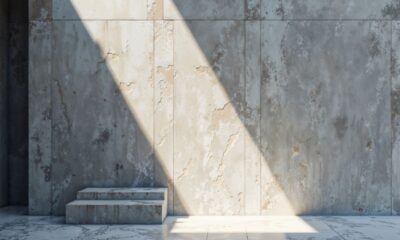
One of the most important factors influencing how a natural stone surface is perceived within a space is lighting. The same stone can produce entirely different effects under varying lighting conditions. Therefore, both natural daylight exposure and artificial lighting scenarios must be considered during surface selection.
In spaces with abundant natural light, surface textures are perceived more clearly, allowing the stone’s natural character to stand out. In areas with limited daylight or entirely artificial lighting, the way the surface reflects light becomes increasingly important.
If the balance between surface texture and lighting is not properly established, the natural beauty of the stone may be diminished, or the space may appear darker than intended. For this reason, surface selection should never be considered independently from lighting design.
Surface Durability and Maintenance Requirements Based on Usage
Regardless of aesthetic appeal, the long-term performance of natural stone surfaces must not be overlooked. Usage intensity, maintenance frequency, and environmental conditions play a decisive role in the selection process.
In high-traffic areas, surfaces must be resistant to wear. In wet areas, slip resistance and moisture durability become essential. For exterior applications, climate conditions, temperature fluctuations, and environmental exposure directly affect surface performance.
At this point, it is important to evaluate not only how the surface looks initially, but how it behaves over time. Solutions that increase maintenance costs in the long run may appear attractive at first, but can become a disadvantage for the project.
Pattern Direction and Spatial Perception
Pattern direction is a powerful design element that directly influences spatial perception. Vertical patterns can make spaces feel taller, while horizontal patterns can create a sense of width. This effect is deliberately used in interior design to shape how a space is experienced.
When pattern direction aligns with architectural lines, the design language of the space is strengthened. When it does not, the surface may appear disconnected from the overall concept. Therefore, surface orientation decisions should be made early in the architectural planning process.
The Contribution of Pronounced Vein-Oriented Surfaces to Projects
Surfaces with pronounced vein orientation serve as strong visual tools, particularly in projects that embrace linear architectural concepts. These surfaces create a natural rhythm across the space, reinforcing design continuity.
To apply this approach successfully, it is essential to understand the technical properties of the surface and the visual effects associated with cutting orientation. From a technical standpoint, surfaces commonly referenced in international projects—such as vein cut travertine applications—represent well-known examples of this directional surface logic and should be evaluated accordingly during surface planning.
Balancing Aesthetics and Function in Material Selection
A successful natural stone application emerges from the balance between aesthetics and functionality. A surface that is visually striking but unsuitable for usage conditions may cause long-term issues.
For this reason, material selection should be guided by questions such as: What character does the surface add to the space? Is it appropriate for the level of use? Are maintenance and cleaning processes sustainable?
The answers to these questions help define the most appropriate surface choice.
The Impact of Surface Decisions on Project Identity
Natural stone surfaces play a key role in shaping a project’s identity. While minimalist designs favor understated and balanced surfaces, more expressive projects may allow the surface itself to become a defining design element.
In classical projects, timelessness is prioritized, whereas modern designs emphasize linearity and clarity. Surface selection ensures that the architectural language is properly expressed and supports the narrative the project aims to convey.
Technical Considerations During the Application Process
Just as important as surface selection is the application process itself. Cutting orientation planning, joint spacing, and layout decisions directly influence how the surface is perceived within the space.
Conducting sample applications before installation helps visualize how the surface will appear in its actual environment. This step also supports effective communication between designers and installers.
Long-Term Project Value Through the Right Surface Selection
Selecting the appropriate natural stone surface for a project should be viewed not only as an aesthetic decision, but as a long-term investment. A properly chosen and correctly applied surface enhances property value, increases user satisfaction, and reduces maintenance costs.
This approach becomes even more critical in large-scale and long-life projects, where surfaces are expected to contribute value over time rather than depreciate.
General Evaluation of Natural Stone Selection for Projects
Determining the right natural stone surface for a project cannot be explained by a single criterion. Project type, spatial scale, lighting conditions, usage intensity, and aesthetic goals must all be considered together.
In this multi-layered decision-making process, it is not only the surface’s current appearance that matters, but also its long-term performance and relationship with the project. Careful planning and a professional approach ensure that natural stone truly adds lasting value to a project.