Blog
Natural Stone Selection Criteria That Support Surface Continuity

The success of a seamless design depends on more than simply using large-format slabs. The physical properties of the selected natural stone, its veining pattern, color consistency, and production quality all play a direct role in achieving a continuous surface appearance.
When selecting natural stone, it is recommended to evaluate the following criteria together:
- Durability suitable for the intended application
- Color consistency between slabs
- Natural continuity of veining patterns
- Availability of large-format slab production
- Compatibility of the surface finish with the project concept
- Long-term maintenance requirements of the material
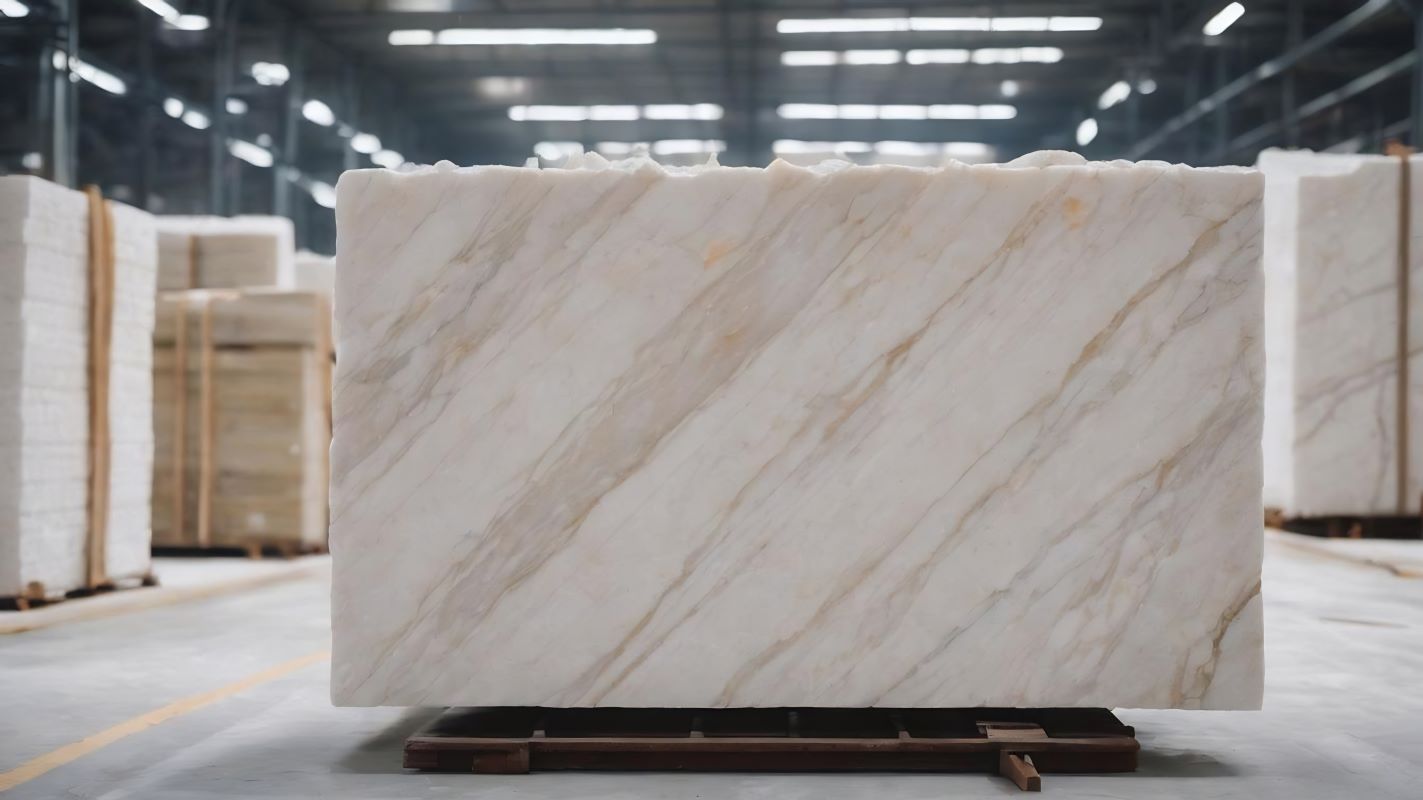
Especially for large-scale surfaces, selecting slabs from the same block—or from blocks with similar characteristics—can help create a more cohesive and visually unified appearance after installation.
In addition, depending on whether the material will be used indoors or outdoors, factors such as water absorption rate, density, and resistance to environmental conditions should also be taken into consideration, particularly when selecting Turkish travertine tiles for long-lasting architectural applications.
The Impact of Color, Veining, and Slab Layout on Design
One of the most striking elements of seamless design is the visual flow created by the natural veining of the stone. For this reason, not only the color of the stone but also the direction of the veining and the slab layout plan are essential parts of the design process.
When natural veining is properly matched, surfaces can appear as a single, uninterrupted composition. Conversely, poor slab placement may diminish the stone’s natural beauty and disrupt the overall continuity of the surface.
With professionally prepared layout plans before installation:
- Veining transitions can be reviewed in advance.
- Visual continuity can be preserved.
- Symmetrical or naturally flowing compositions can be created.
- Unnecessary cutting can be minimized.
- Material waste can be managed more efficiently.
Surface finishes also influence the overall visual perception of the design. Polished finishes reflect more light, while honed or brushed finishes provide a softer, more natural matte appearance. Choosing the appropriate finish based on the project’s architectural concept is one of the key factors that enhances the effectiveness of seamless design.
The Importance of Professional Planning in Seamless Design Applications
Seamless surface applications require more planning and coordination than conventional cladding projects. Making informed decisions during the design phase can help prevent many challenges during installation.
A successful planning process should include the following considerations:
- Determining natural stone dimensions according to the project’s modular design
- Planning transportation and installation procedures
- Numbering veining directions before fabrication
- Preparing detailed cutting plans
- Selecting the appropriate adhesives and installation systems
- Designing expansion and movement joints according to technical requirements
In projects involving large-format slabs, the experience of the installation team can directly influence the final surface quality. Even minor dimensional differences measured in millimeters may become noticeable across large areas, making precision installation techniques essential.
Furthermore, maintaining strong coordination between the architect, installer, and natural stone supplier throughout the project helps achieve better results from both aesthetic and technical perspectives.
Seamless Natural Stone Designs in the Architecture of the Future
As minimalism continues to shape contemporary architecture, seamless natural stone applications are expected to become even more widespread in the coming years. Thanks to large-format slabs, advanced processing technologies, and digital manufacturing methods, it is now possible to create expansive surfaces with exceptional precision.
This evolution is also raising quality standards across the natural stone industry. Beyond visual appeal, factors such as block selection, manufacturing precision, surface finishing quality, and product consistency throughout the project have become increasingly important.
At this point, Cem Marble offers marble, travertine, limestone, and other natural stone solutions suitable for projects of various scales, backed by extensive industry experience. By focusing on quality control, natural texture consistency, and a wide range of surface finish options throughout the production process, the company provides products that meet the technical expectations of architects and project teams. Especially in large-scale developments, maintaining material consistency and superior natural stone quality remains one of the essential elements of successful seamless design applications.
The Importance of Professional Planning in Seamless Design Applications
Seamless surface applications require more planning and coordination than conventional cladding projects. Making informed decisions during the design phase can help prevent many challenges during installation.
A successful planning process should include the following considerations:
- Determining natural stone dimensions according to the project’s modular design
- Planning transportation and installation procedures
- Numbering veining directions before fabrication
- Preparing detailed cutting plans
- Selecting the appropriate adhesives and installation systems
- Designing expansion and movement joints according to technical requirements
In projects involving large-format slabs, the experience of the installation team can directly influence the final surface quality. Even minor dimensional differences measured in millimeters may become noticeable across large areas, making precision installation techniques essential.
Furthermore, maintaining strong coordination between the architect, installer, and natural stone supplier throughout the project helps achieve better results from both aesthetic and technical perspectives.
Seamless Natural Stone Designs in the Architecture of the Future
As minimalism continues to shape contemporary architecture, seamless natural stone applications are expected to become even more widespread in the coming years. Thanks to large-format slabs, advanced processing technologies, and digital manufacturing methods, it is now possible to create expansive surfaces with exceptional precision.
This evolution is also raising quality standards across the natural stone industry. Beyond visual appeal, factors such as block selection, manufacturing precision, surface finishing quality, and product consistency throughout the project have become increasingly important.
At this point, Cem Marble offers marble, travertine, limestone, and other natural stone solutions suitable for projects of various scales, backed by extensive industry experience. By focusing on quality control, natural texture consistency, and a wide range of surface finish options throughout the production process, the company provides products that meet the technical expectations of architects and project teams. Especially in large-scale developments, maintaining material consistency and superior natural stone quality remains one of the essential elements of successful seamless design applications.